
Criminal Court Cases in Torrance County
Torrance County criminal cases divide by court authority, not merely by the address where a clerk works. The Seventh Judicial District Court hears felonies, juvenile matters, and criminal appeals from lower courts. Torrance County Magistrate Court handles misdemeanors, DWI and traffic matters, plus the preliminary stage of many felony cases. Moriarty, Estancia, and Mountainair municipal courts keep their own ordinance and qualifying petty-misdemeanor files. A city citation may never turn into a District Court file.
The District Court and Magistrate Court functions share the Neil Mertz Judicial Complex at 903 North Fifth Street in Estancia. That shared site does not merge their dockets. District matters commonly use a D-725 prefix; Magistrate matters use M-56. The prefix is often the fastest clue to the right counter. The state court finder supplies current venue information before a visit.
Mail routing also differs from the shared street location. Torrance County Magistrate Court lists P.O. Box 2027, Moriarty, NM 87035, with fax 505-832-1563. District Court lists fax 505-384-2229. A requester should put the court name and case number on any copy inquiry rather than send a vague request to the building. The Seventh Judicial District Attorney has a separate office at the complex and keeps its own prosecutorial records. Filed pleadings, judgments, and sentencing orders should still be requested from the court clerk.
Torrance Court Prefixes Prevent Mix-Ups
Two files can concern the same event yet sit in different Torrance County court streams. A felony complaint and preliminary hearing may appear under M-56 before an indictment or information produces a D-725 District Court case. The later file does not erase the first. Search both prefixes when the record trail seems to stop between the first appearance and felony arraignment.
The New Mexico Courts Case Lookup screen shows how statewide party and case-number searches begin.
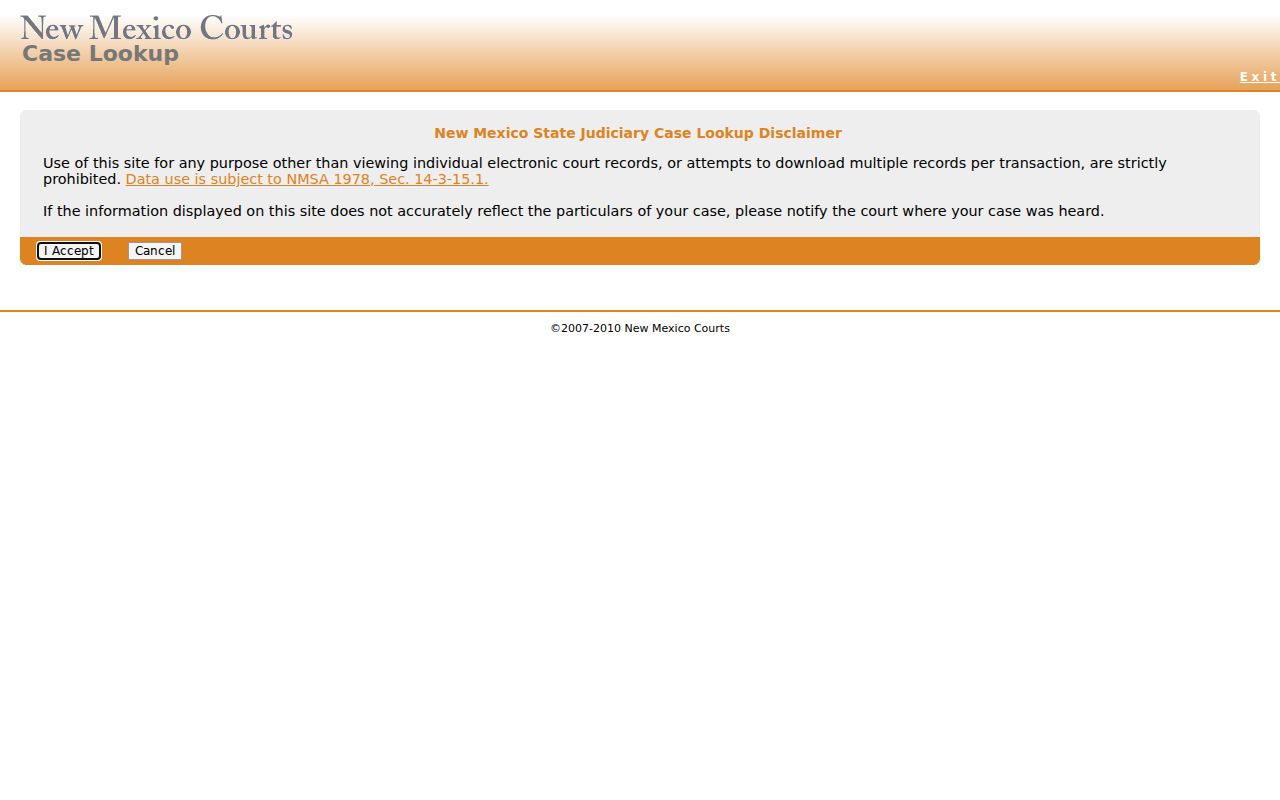
That interface is useful for finding a case number and court, while the clerk remains the source for pleadings and certified copies.
Torrance County Case Record Searches
Begin with Case Lookup and use the legal spelling of the party name. Try known name variants separately. A complete case number is better than a broad name search because it identifies the court and file at once. If a result is absent, use the seven-day Magistrate docket for near-term hearings, call the proper clerk, or submit a focused Judiciary records request. The docket covers only the current day plus six future days and is not a historical search.
- Accept the Case Lookup terms and choose name or case-number mode.
- Enter the full case number when known, including D-725 or M-56.
- For a name search, use the legal last name, first name, and any available narrowing field.
- Open the result and note the venue, status, filing date, charges, and docket events.
- Ask that court's clerk for a filed document or certified copy when the summary is not enough.
| Field label | Type | Required | Use |
|---|---|---|---|
| Name | Search mode | One mode | Finds a person or party by legal spelling. |
| Case Number | Search mode and text | One mode | Use the full prefix and number when known. |
| First Name | Text | Conditional | Narrows a name-mode search. |
| Last Name | Text | Conditional | The strongest basic name field. |
| Date of Birth | Date or text | No | May help separate common names where offered. |
| Court or Location | Filter | No | Focus on the Seventh Judicial District or Torrance venue. |
| Case Category | Filter | No | Separates criminal matters from other case types. |
Search results are leads. Spelling differences, sealed matters, reporting delay, and incomplete historical conversion can affect what appears.
Torrance Magistrate Docket Limits
The public Torrance Magistrate docket is a schedule, not a full archive. It may help confirm an imminent hearing, but its own disclaimer warns that entries can be omitted and are not warranted as complete. If no hearing appears, call the Magistrate Court at 505-832-4476. An empty schedule is not proof that no M-56 case or hearing exists.
The official Torrance Magistrate docket illustrates this narrow time window.
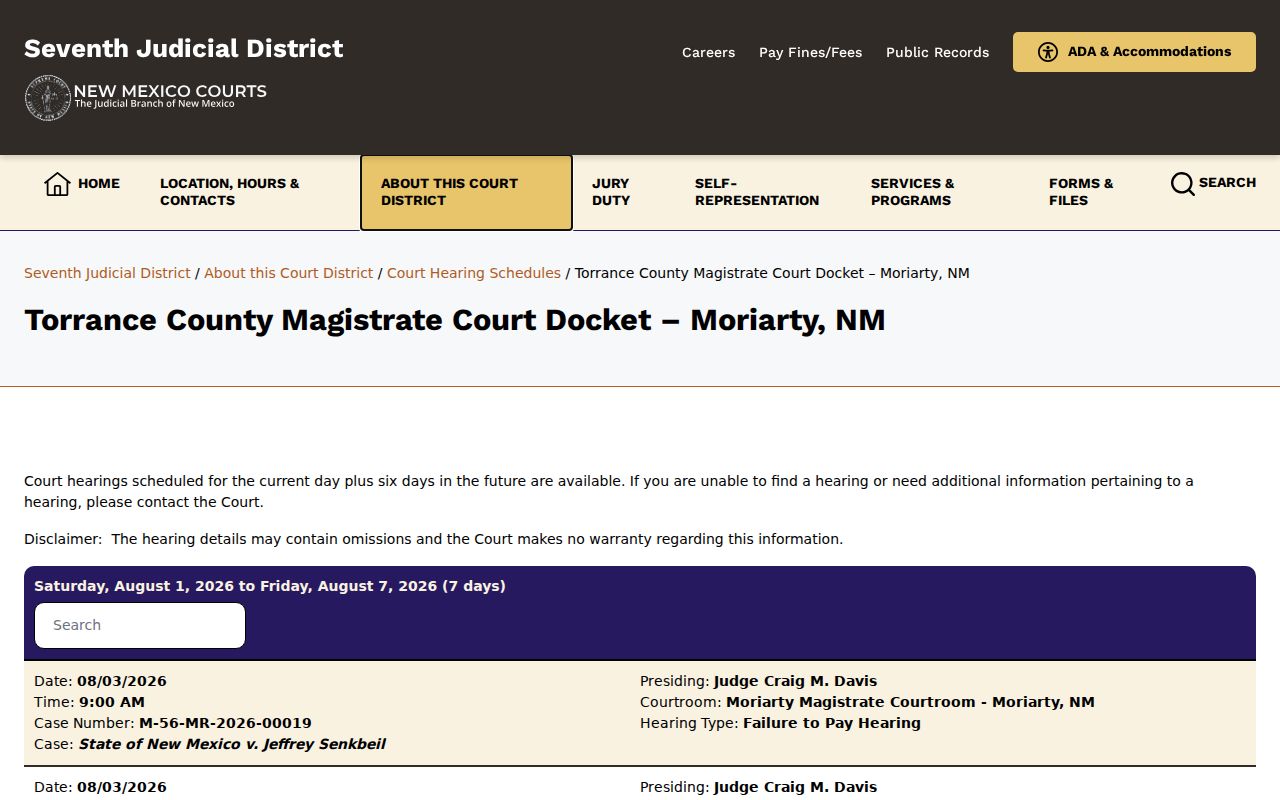
Use its hearing details as a lead, then confirm the live calendar and file status with the clerk.
Note: A hearing schedule can change after publication, so phone confirmation matters before a long trip to Estancia.
What a Criminal Case File Contains
A Torrance County criminal case file records the prosecution rather than the full arrest investigation. It can contain the complaint, indictment or information, attorney entries, motions, hearing notices, orders, plea papers, judgment, sentence, warrant entries, and later post-judgment activity. Case Lookup summarizes many of those events, but it does not promise a downloadable copy of each filed item. Protected identifiers, victim information, juvenile material, sealed documents, and expunged matters may be hidden or restricted.
| Case number and court | Identifies the venue, jurisdiction, and file prefix. |
|---|---|
| Charging document | Shows the filed allegations in a complaint, information, or indictment. |
| Docket entries | Lists filings, orders, notices, hearings, warrants, and closure events by date. |
| Parties and judge | Names public case roles and the assigned judicial officer. |
| Disposition and judgment | Records dismissal, acquittal, plea, verdict, or another formal outcome. |
| Sentence and money | May show custody, probation, restitution, fines, fees, and related orders. |
The filed judgment answers the outcome question more reliably than a lone charge label or general status shown near the top of a result.
Read Torrance Case Outcomes Carefully
One status label rarely tells the whole story. A dismissal ends a charge without a conviction. A conviction follows a guilty or no-contest plea with judgment, or a guilty verdict. A deferred sentence requires the final order and later docket entries because the legal effect depends on compliance and the court's closing action. “Nolle prosequi” means the prosecutor declined to continue a count. It should not be read as an acquittal.
- Disposition
- The formal result of a charge or case.
- Arraignment
- The hearing at which charges and a plea are addressed.
- Information
- A prosecutor-filed charging document used to carry a felony case forward.
- Deferred sentence
- A sentence handled under statutory deferment terms that must be read with later orders.
- Bench warrant
- A judge's arrest authority, often issued after a missed appearance or unmet court duty.
The clerk's signed order controls when a web summary looks unclear. A booking allegation can also differ from the filed count because prosecutors may amend, decline, replace, or dismiss the original charge.
Criminal Case Stages in Torrance County
A state criminal case may begin with an arrest or summons and a complaint. Magistrate Court handles the initial appearance and, in a felony matter, the preliminary stage. A grand-jury indictment or prosecutor's information can then move the prosecution to District Court. Discovery, motion practice, and plea talks follow. If no plea resolves the case, the matter proceeds to trial. Judgment, sentencing, appeal, and post-judgment motions create later entries.
Case flow: Charges Filed › Arraignment › Pretrial › Plea or Trial › Disposition › Sentencing
Torrance County also has Adult Treatment Court and District/Magistrate DWI Court programs. Public docket entries can show review hearings, sanctions, graduation, or termination. Confidential treatment records do not become public just because a related court event is listed.
Missing Torrance Court Documents
When a needed pleading is not online, identify the court, case number, document title, and approximate filing date before contacting the clerk. District Court at the Neil Mertz Judicial Complex is reached at 505-384-2974, extension 40. Magistrate Court uses 505-832-4476. Ask whether the record is public, how copies are delivered, and what current certification charge applies. No unverified copy price should be mailed in advance.
Torrance County Court Clerks
Neil Mertz Judicial Complex
903 N. Fifth St.
Estancia, NM 87016
District: 505-384-2974 ext. 40
Magistrate: 505-832-4476
The New Mexico Judiciary IPRA channel is the formal fallback for identifiable Judiciary records.
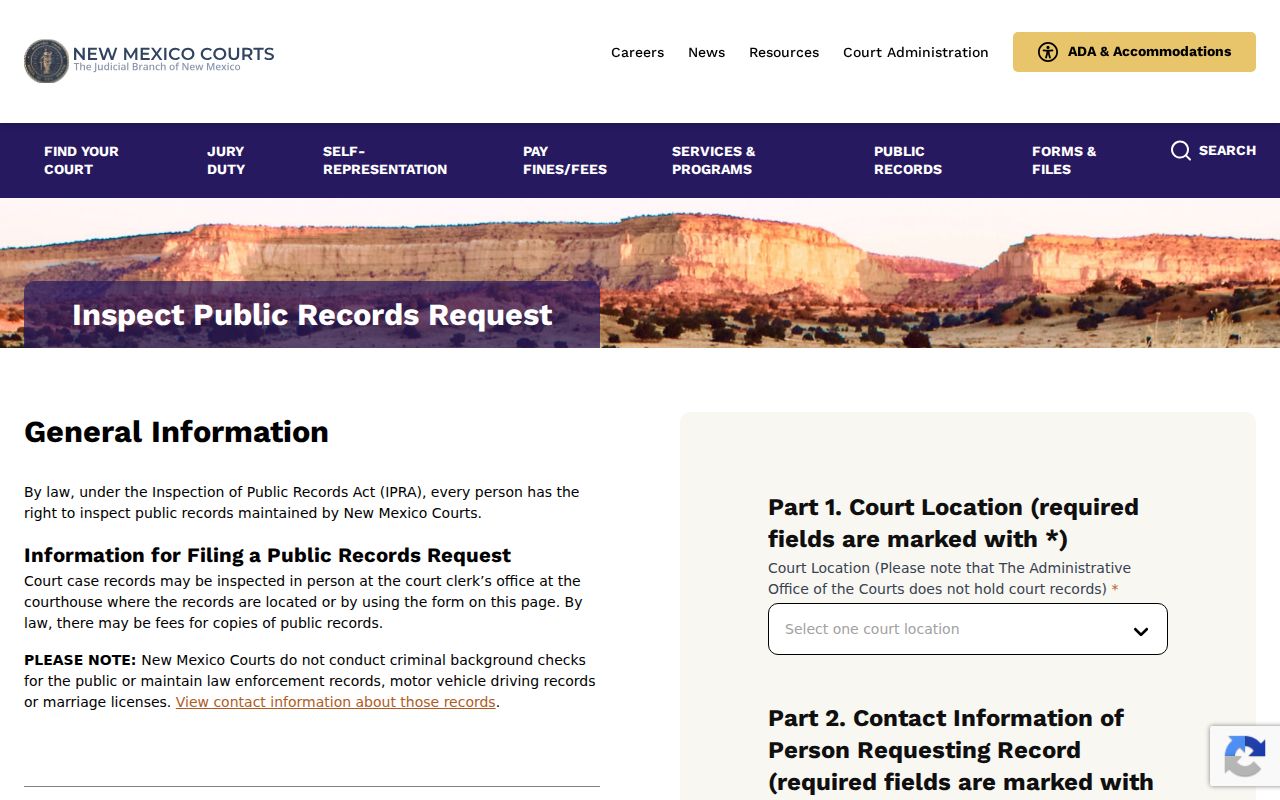
A narrow request reduces delay and helps the custodian locate the precise Torrance County court record without creating a new report.
Federal Cases Beyond Torrance Courts
Federal crimes arising in Torrance County belong to the U.S. District Court for the District of New Mexico, not D-725 or M-56. PACER is the official docket and document channel after registration. It generally charges ten cents per page, subject to the Judiciary's current quarterly waiver rule. Sealed documents and protected identifiers remain unavailable.
The official PACER access service is the starting point for a federal docket.
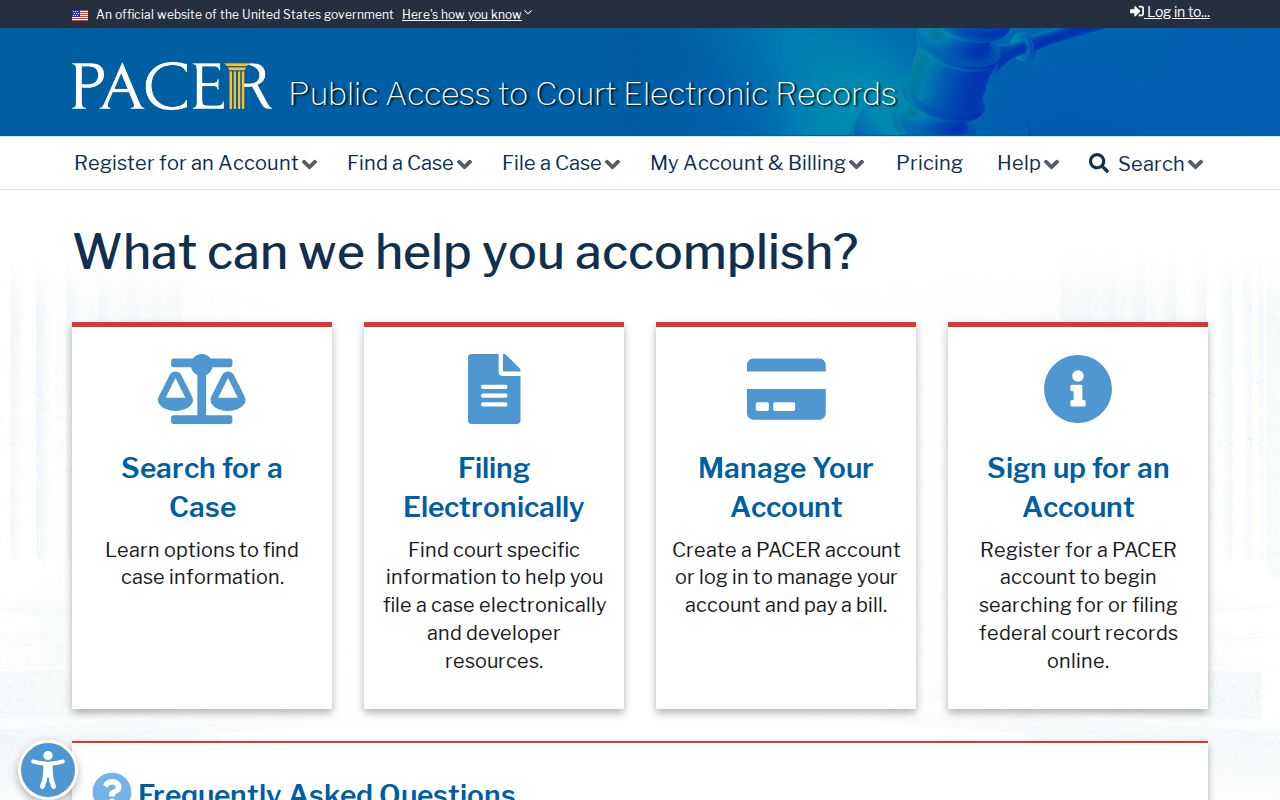
PACER results should not be mixed with New Mexico court files because each system has its own case numbers and clerk.
A sentence to federal prison also moves custody outside the county system. The Bureau of Prisons Inmate Locator covers federal prisoners only.
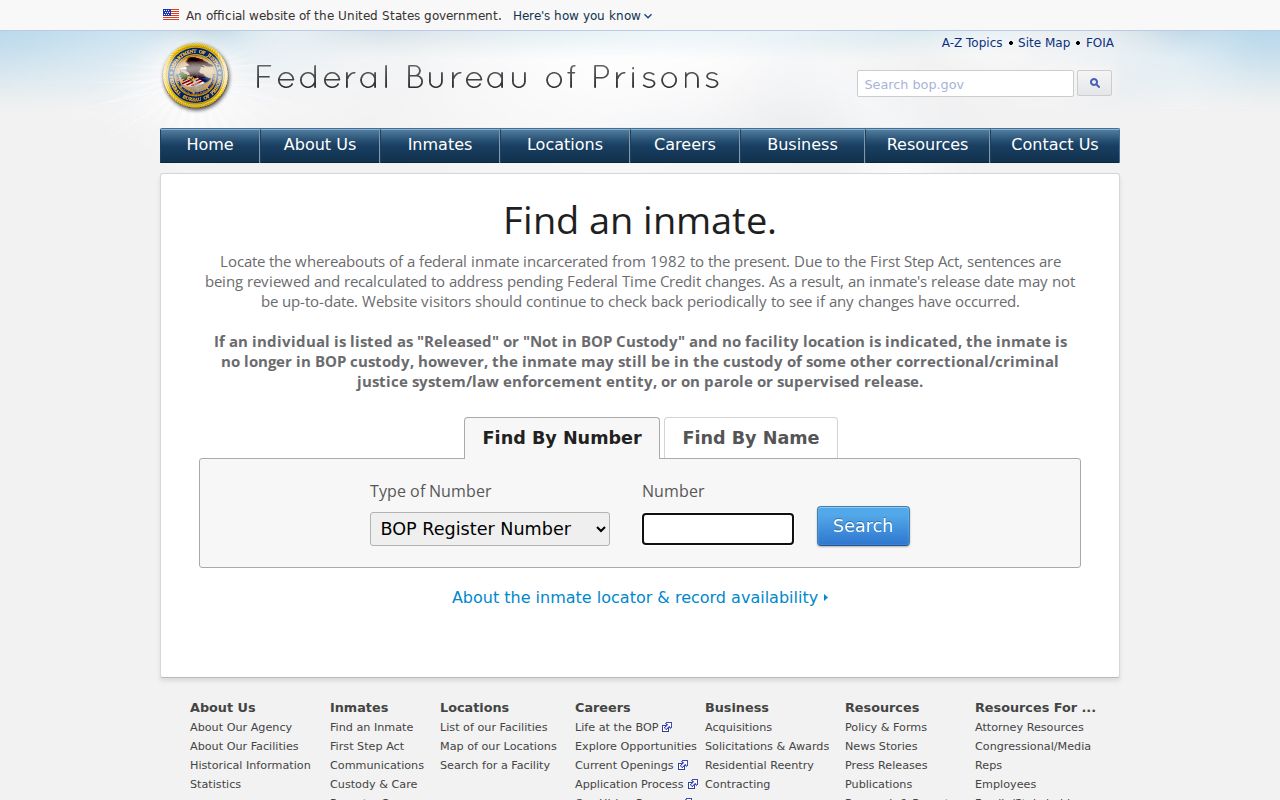
That custody search complements a federal docket but does not replace the judgment or sentencing papers.
Access Rules for Case Records
New Mexico court records begin with a presumption of access, but the right is not absolute. Rule 1-079 NMRA governs public access and protection of court records. Juvenile matters, sealed or expunged cases, protected victim and minor data, account numbers, medical information, and sensitive identifiers may be restricted or redacted. A public docket may therefore show less than the clerk's protected file.
The New Mexico Inspection of Public Records Act supports requests for identifiable public records. It does not require the clerk to answer broad research questions or create a custom case report. State repository access is also different: NMSA 1978 §29-10-6 permits a person to inspect that person's arrest record through the authorized DPS process, not through a public name database.
Search delay can have several causes. A new filing may not yet be indexed, an older case may not have been fully converted, a name may be spelled differently, or a court order may restrict access. Ask the clerk to check the case number before concluding the file does not exist. When an expungement order should have changed access but a public entry remains, the certified order and the reporting custodian are the right tools for follow-up.
Moriarty Municipal Court maintains city matters separately, as its official court page reflects.
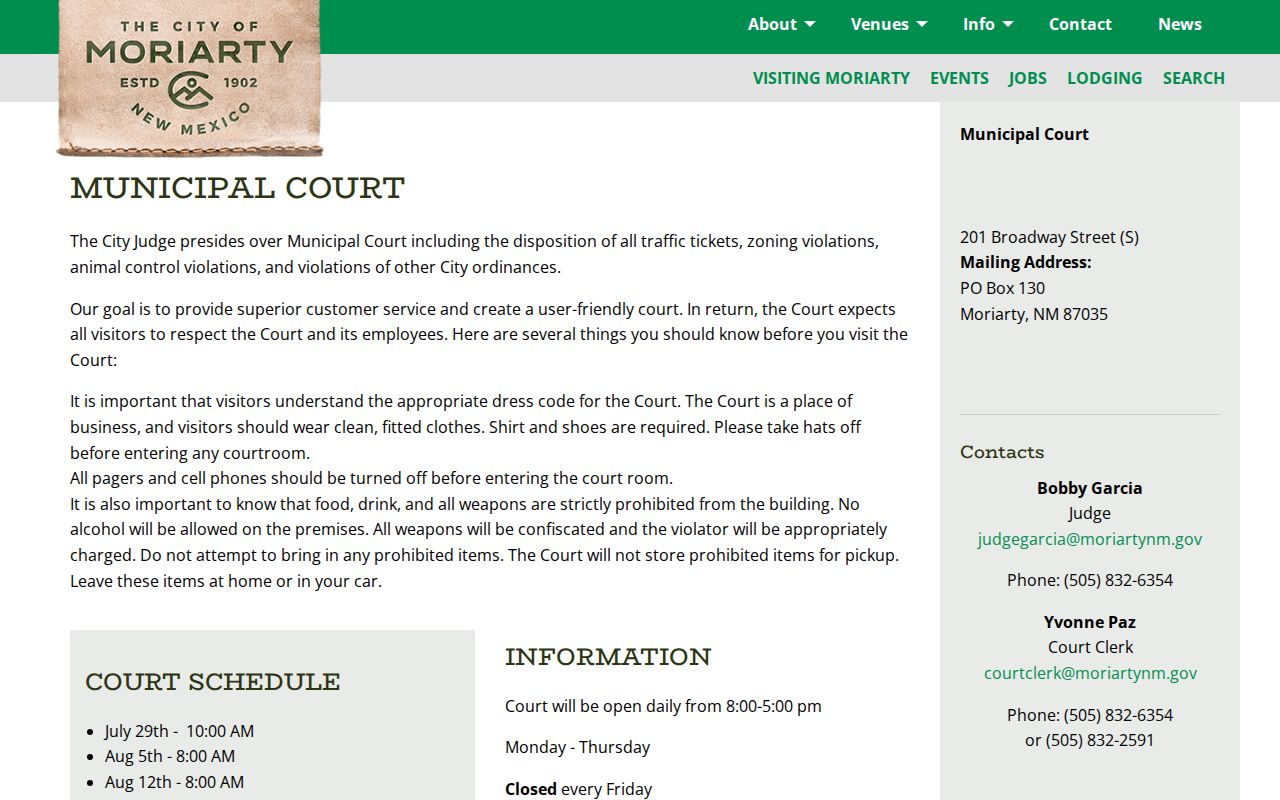
A municipal citation belongs with that city clerk unless a distinct state-court prosecution also arose.
Note: The certified clerk record controls over an incomplete online summary, a schedule page, or an arrest charge.