
Arrest Records in Torrance County
The Torrance County Sheriff's Office makes arrests in county areas and holds sheriff-created reports. Moriarty, Estancia, and Mountainair police keep the narratives their own officers create. New Mexico State Police holds its state-police reports. A receiving jail separately records intake, charges, bond or holds, housing status, release, or transfer. The court later records the complaint and filed charges if prosecutors proceed.
These Torrance County arrest records overlap but do not match field for field. An incident report explains the event and claimed probable cause. A booking entry proves that intake occurred. Neither is a judgment of guilt. A fingerprint-based New Mexico Record of Arrest and Prosecution can group qualifying arrest cycles with reported outcomes, though missing or late dispositions can leave gaps.
No Torrance County Booking Log
No stable official Torrance County online inmate roster or daily booking database was verified. That absence changes the first step. Call the arresting agency or current detention contact and ask whether the person is in custody, has bonded out, was cited and released, or transferred elsewhere. A missing online result cannot prove that no arrest occurred.
The detention facility page and sheriff contact are official starting points, but the research did not confirm that every current municipal or sheriff arrest is booked into one site. The Torrance County Detention Facility at 209 County Road AO49 in Estancia is presented as a multi-jurisdictional facility. Call 505-384-2711 to ask what population it currently receives. Do not assume that historical county or federal use defines today's booking route.
Torrance County Arrest Lookups
A complete lookup follows the event from agency report to custody record, court filing, and, for a self-review, the state repository. Have the legal name, event date, location, agency, and any report, booking, warrant, or case number ready. Narrow facts help the custodian locate the record and reduce needless redaction work.
- Identify the arresting agency and ask where the person was booked or taken after arrest.
- Call the receiving facility or sheriff for current custody, booking number, bond, release, or transfer information.
- Request the arrest or incident report from the originating sheriff, city police, or State Police records office.
- Search New Mexico Courts Case Lookup and the short Torrance Magistrate docket for a later filing.
- Use county IPRA, city IPRA, Judiciary IPRA, or NMDPS GovQA when routine access does not supply the record.
- For one's own statewide fingerprint history, submit the notarized DPS authorization and current required fee.
Torrance County Sheriff's Office
Neil Mertz Judicial Complex
903 N. Fifth St.
Estancia, NM 87016
505-544-4900
Mail: P.O. Box 498, Estancia, NM 87016
Confirm the current records method and any charge before sending identification, payment, or original documents to an office.
Who Owns Torrance Arrest Reports
The agency whose officer made the arrest normally owns the narrative. The Torrance County Sheriff does not automatically hold Moriarty Police Department's report merely because a person later entered county custody. The same rule applies to Estancia and Mountainair police. New Mexico State Police requests route to NMDPS through GovQA or LERB contacts, including 505-476-2400 and dps.ipra@dps.nm.gov.
| Arresting agency | First records channel |
|---|---|
| Torrance County Sheriff | Sheriff contact and county IPRA request. |
| Moriarty Police | City police contact or Moriarty public-record request. |
| Estancia Police | Town police or town IPRA channel. |
| Mountainair Police | Town police or town clerk IPRA channel. |
| New Mexico State Police | NMDPS GovQA/IPRA and LERB. |
The official Moriarty Police Department page is one city-specific route.
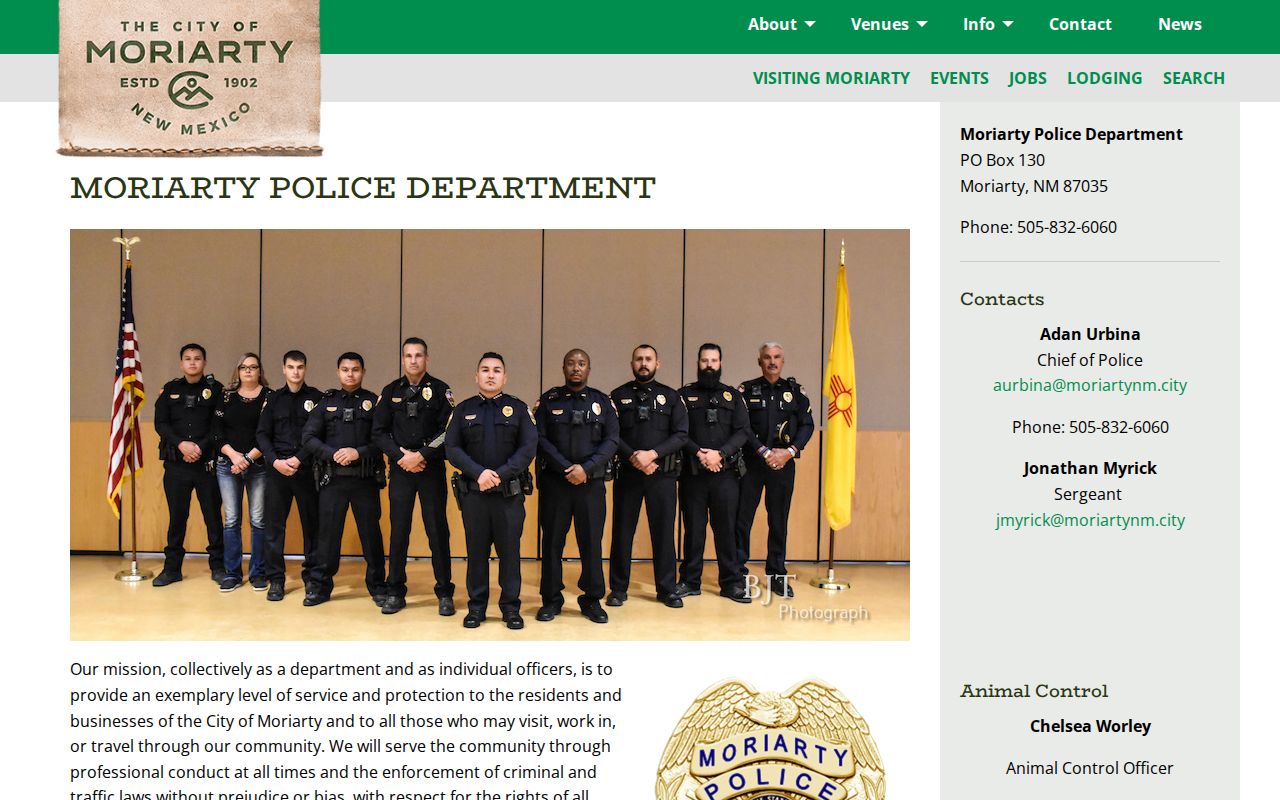
A Moriarty officer's report stays with the city even when booking or prosecution produces separate county records.
Arrest Records: What They Contain
A public booking response may show the person's name and aliases used at intake, booking or control number, arresting agency, intake date and time, initial charges, linked case or warrant number, bond or hold, custody status, release, and facility. The agency report can add the event site, alleged conduct, officer narrative, property, and investigative attachments. Protected data is often removed.
Booking itself follows a sequence. Staff record identity and property, conduct medical and safety screening, take a photograph, collect fingerprints on qualifying arrests, enter charges and holds, classify custody, and prepare for a first appearance or bond decision. Each step can create data that is not public in full. Medical screening, housing classification, and security notes normally require protection even when basic intake and release facts can be disclosed.
| Booking number | Links intake, custody, and release events within the facility system. |
|---|---|
| Booking date and time | Shows when the receiving facility processed the person. |
| Arresting agency | Identifies the custodian of the arrest narrative. |
| Initial charges | Lists booking allegations, which may differ from filed or final charges. |
| Bond or hold | Records the entered release condition or reason release is blocked. |
| Photograph policy | A photograph may be taken at intake, but no public online release should be assumed. |
| Release status | May show release, bond, transfer, or current custody at the time checked. |
Full birth dates, addresses, medical and classification data, juvenile information, protected victim details, and sealed charges may be withheld. Requesting a booking photograph remains subject to IPRA and lawful redaction. No photographs or names from individual arrests are republished here.
Torrance Arrest Fingerprint Cycle
A qualifying fingerprint card starts a different record stream. When an arrest is fingerprintable, the contributing agency submits identifying data and arrest information to the New Mexico State Central Repository. LERB says the repository covers New Mexico felony arrests, misdemeanors punishable by at least six months, and DWI. An incident that never produces a qualifying fingerprint submission may not become a repository cycle.
For self-review, use the NMDPS fingerprinting and record instructions.
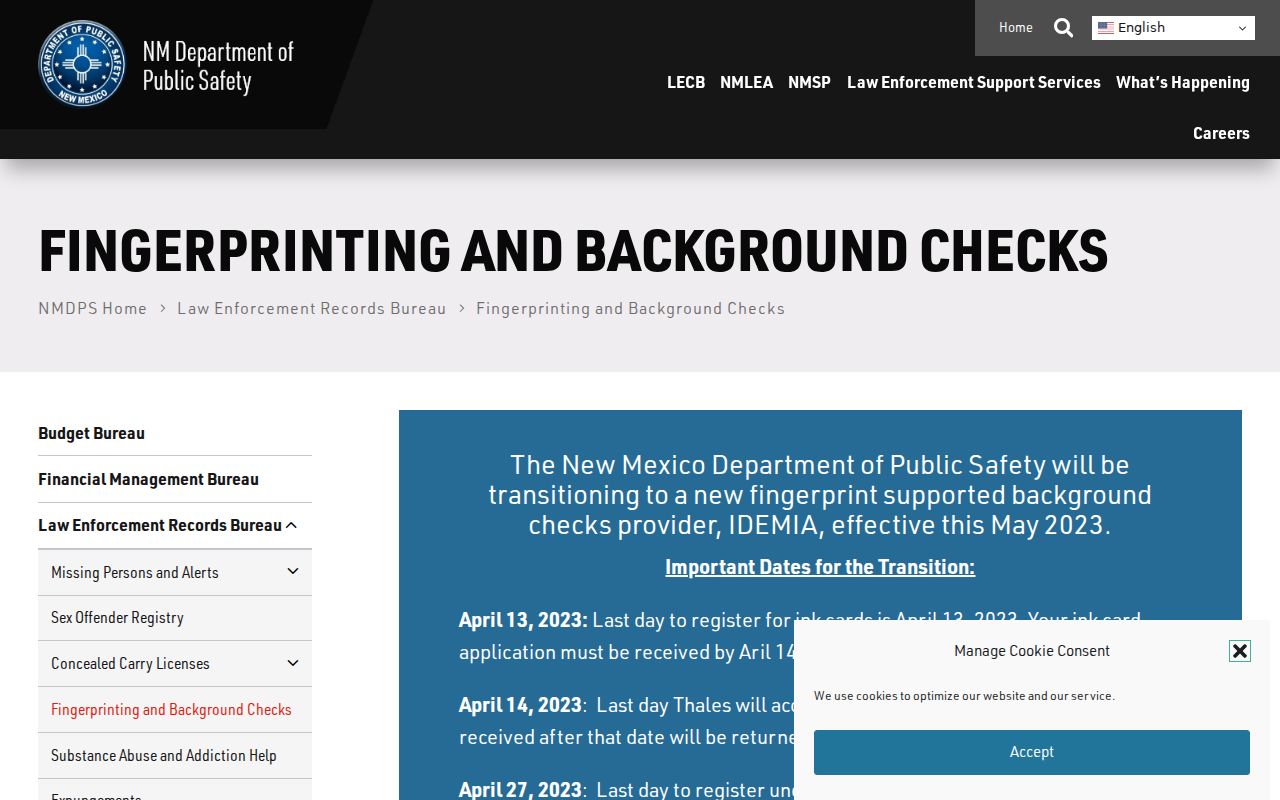
The process requires the DPS Authorization for Release of Information, a notarized signature, and the current $15 fee. It is not an open public name search.
A federal self-check uses fingerprints through the FBI electronic request portal and costs $18.
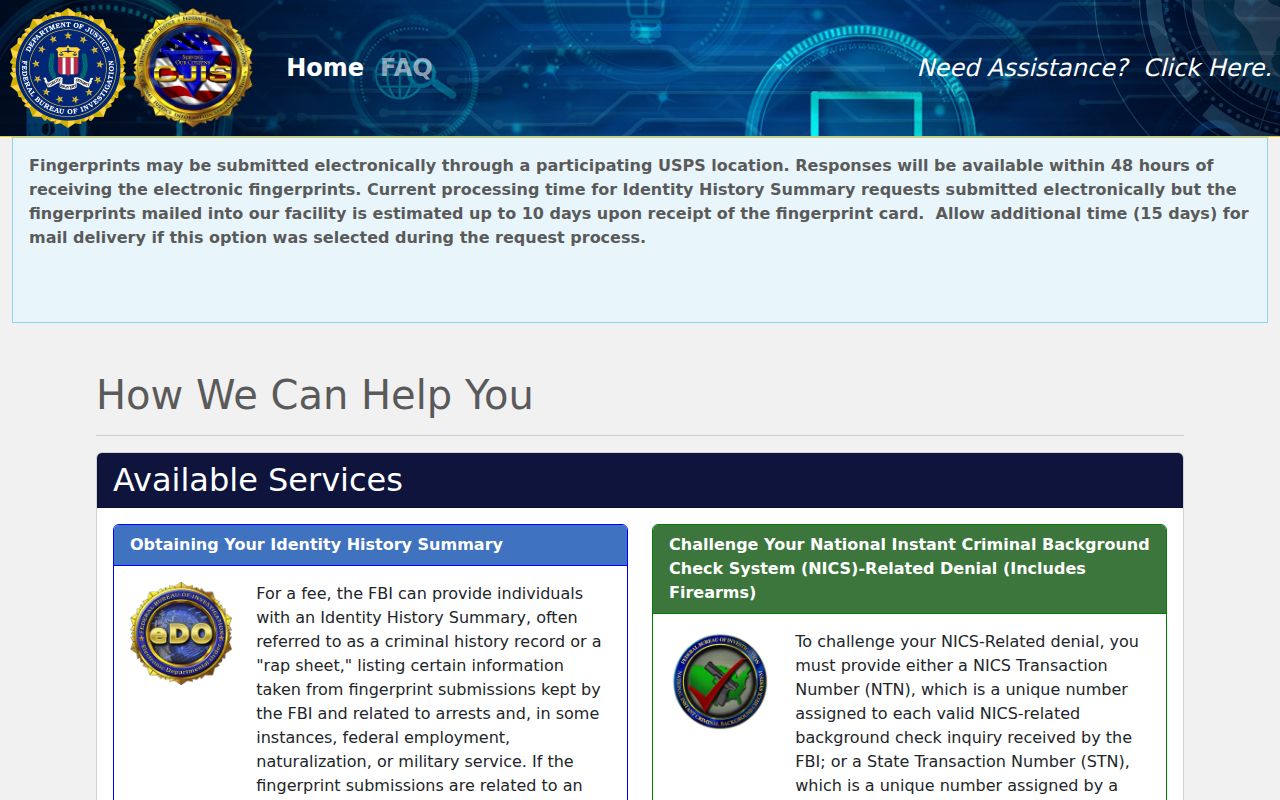
The FBI result covers identity-history submissions known to the FBI and includes a challenge route for incomplete or inaccurate entries.
Recent Torrance County Bookings
With no verified county booking log, recent-arrest work depends on phone and request channels. Start with the arresting agency and likely receiving facility. Ask for the booking number, current custody status, release or transfer, and the custodian of releasable booking data. If the person is not found, check whether the event led to citation and release, a different jail, federal or immigration custody, or a fast bond-out.
VINELink may offer custody notices when a participating agency supplies data, but confirm all status with the jail. NMCD Offender Search does not cover county and city detention. Prison information updates nightly, while public probation and parole status updates in real time. A fresh local arrest therefore may be absent from NMCD even when it occurred.
Note: A current roster, where available, is a custody snapshot and never a full Torrance County arrest history.
After Release Before Court Updates
A person can leave custody before a new complaint appears online. Keep the booking number, release paper, citation, and any first-appearance details. Then search Case Lookup by legal name and likely M-56 or D-725 prefix. Call Magistrate Court when a near-term hearing is expected but does not appear on the seven-day docket. Charges at booking may be changed or declined before filing.
If a filed case later appears, the Torrance County court case record provides the prosecution trail and formal disposition. The arrest report still remains with the originating agency. A warrant arrest can create two trails at once: the older issuing-court record and a new arrest and booking record. Confirm any live warrant, recall, and bond directly with the issuing court.
Arrest Records vs Conviction Records
An arrest records a law-enforcement action based on alleged probable cause. A conviction records a finding of guilt by plea or verdict followed by judgment. Different custodians create each product, and the dates, charge labels, and outcomes can diverge. A Torrance County booking may end with no filed charge, dismissal, acquittal, or a conviction on an amended count.
| Point | Arrest record | Conviction record |
|---|---|---|
| Creator | Arresting agency and receiving jail. | Court clerk after a criminal judgment. |
| Meaning | Shows an arrest or booking occurred. | Shows guilt was established in court. |
| Best source | Agency report and jail custody data. | Judgment, sentence, and certified court file. |
| Possible end | Release, transfer, no charge, or later prosecution. | Sentence, appeal, or eligible expungement. |
Note: An arrest is not proof of guilt, and an initial booking charge is not the final court outcome.
Torrance Arrest IPRA and Expungement
New Mexico IPRA is the formal path when no routine release channel exists. Describe the record with reasonable detail and request electronic delivery when possible. Torrance County's verified custodian is reached through the county IPRA page, at IPRA@tcnm.us, or 505-544-4707. County electronic production is free; paper is $1 per page, and a flash drive is actual cost. Advance payment may be required.
The county web form asks for the requester's name, address, city, state, ZIP, email, phone, a reasonably particular description, and an agreement or signature. For a Torrance County arrest record, add the incident location and date plus a case, CAD, report, booking, or warrant number if known. IPRA generally calls for prompt inspection and a response within 15 days when records are not immediately available, though a burdensome request can require a written explanation and more time.
IPRA allows redaction of confidential law-enforcement information, protected victims, juveniles, medical data, financial identifiers, and sealed or expunged content. A narrow date, exact place, agency, incident number, and desired item can make review faster. Court records use the Judiciary request channel, while State Police material uses NMDPS GovQA.
Eligible arrest records may later be sealed through New Mexico expungement. The official Judiciary expungement forms give the court route.
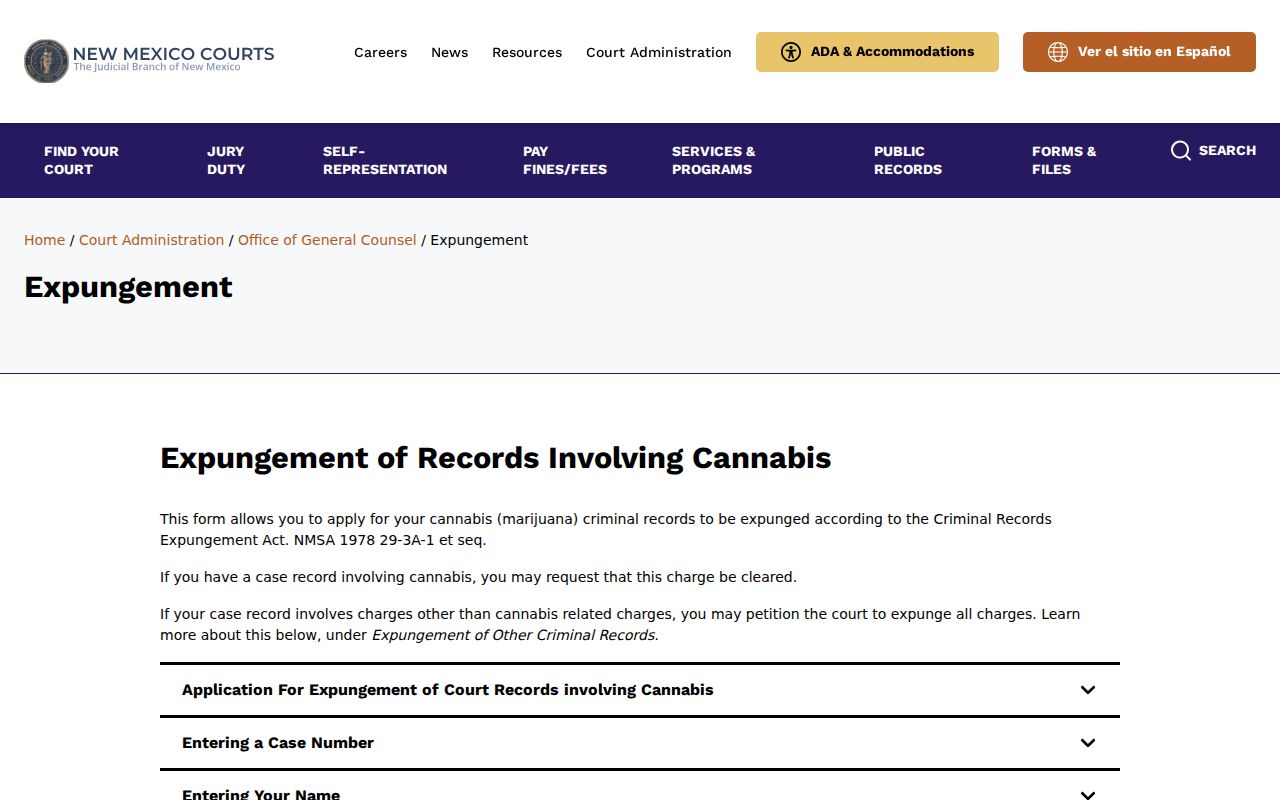
A non-conviction petition generally needs the New Mexico RAP sheet and a one-year wait after final disposition, subject to the statute and case facts. An entered order, not mere eligibility, changes public access.
If the order is granted, implementation can involve the court, arresting agency, detention record, and state repository. A later self-review can show whether the DPS cycle was updated. A court search can reveal whether ordinary public access changed. Send a certified order to the custodian that still reports the eligible record instead of assuming one office automatically corrected every separate system.